If you or your child is thinking about learning piano, one of the first questions you may have is:
Should I buy a piano or a keyboard?
The answer depends on your goals, budget, available space and how seriously you plan to pursue piano playing.
Both instruments can be useful for beginners, but they are not exactly the same. Understanding the differences can help you choose an instrument that supports good learning habits from the beginning.
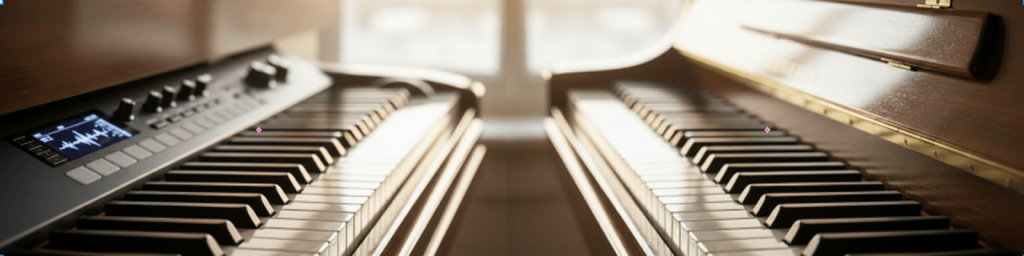
What Is the Difference Between a Piano and a Keyboard?
An acoustic piano has weighted keys and produces sound through hammers striking strings.
A keyboard is an electronic instrument and can vary significantly in size, sound quality and the feel of its keys.
Some keyboards have only 61 keys and lightweight keys, while others have 88 weighted keys designed to feel more like an acoustic piano.
This distinction is important.
When choosing an instrument for piano lessons, it is not simply a choice between a traditional piano and any type of keyboard.
Is an Acoustic Piano Best for Beginners?
An acoustic piano is an excellent instrument for learning.
A standard piano has:
- 88 keys
- Weighted keys
- A wide range of dynamics
- A natural piano sound
- Pedals that allow students to develop important playing techniques
The weighted keys help students develop proper finger strength and control.
An acoustic piano also allows students to learn how to control the volume and tone of each note through their touch.
However, acoustic pianos are larger, more expensive and require regular tuning and maintenance.
For some families and adult beginners, a traditional piano may not be practical.
Is a Keyboard Good Enough for Learning Piano?
A keyboard can be a useful starting point, particularly when space or budget is limited.
However, the type of keyboard matters.
A small keyboard with lightweight keys may be suitable for exploring music and learning basic songs, but it is not ideal for long-term piano development.
For students who are serious about learning piano, a full-size digital piano with 88 weighted keys is generally a much better option.
A quality digital piano can provide:
- 88 full-size keys
- Weighted or hammer-action keys
- A more realistic piano feel
- Headphone compatibility
- Volume control
- No need for regular tuning
For many beginners, a good digital piano provides an excellent balance between practicality and a proper piano-playing experience.
Why Are Weighted Keys Important?
Weighted keys feel more similar to the keys of an acoustic piano.
This is important because piano playing involves learning how to control the movement and pressure of your fingers.
Students also learn to create different levels of sound, from soft and delicate to strong and powerful.
Lightweight keyboard keys do not always respond in the same way.
While beginners can certainly learn basic musical skills on a keyboard, practising on weighted keys can make the transition to an acoustic piano much easier.
How Many Keys Do You Need?
A standard piano has 88 keys.
Many beginner keyboards have fewer keys, such as 61 or 76.
For very young beginners, a smaller keyboard may initially seem sufficient. However, as students progress, they will eventually need access to a wider range of notes.
For this reason, an 88-key digital piano is usually the best long-term investment for students who plan to continue learning.
It allows beginners to develop their skills without quickly outgrowing their instrument.
What About Touch Sensitivity?
When choosing a digital piano or keyboard, look for touch-sensitive or velocity-sensitive keys.
This means the instrument responds differently depending on how hard or softly a key is played.
This is an important part of learning piano because music is not simply about playing the correct notes.
Students also need to learn expression and dynamics.
Being able to play softly and loudly helps students develop musical control from an early stage.
Acoustic Piano vs Digital Piano
For many beginners, the decision may actually come down to an acoustic piano versus a digital piano, rather than a piano versus a basic keyboard.
An acoustic piano may be a good choice if:
- You have enough space
- You enjoy the sound and feel of a traditional piano
- You are committed to regular maintenance and tuning
- You want a long-term instrument
A digital piano may be a good choice if:
- You have limited space
- You need to control the volume
- You want to use headphones
- You do not want to worry about tuning
- You want an instrument that is easier to move
Both can be excellent instruments for learning.
What Is Best for Children?
Parents often wonder whether they should invest in a piano before knowing whether their child will continue with lessons.
This is understandable.
For a child who is just starting, a good-quality digital piano can be a practical option.
Ideally, choose an instrument with:
- 88 keys
- Weighted or hammer-action keys
- Touch sensitivity
- A stable stand or suitable piano-style setup
- A sustain pedal
This gives the child an instrument that can support their progress as they develop.
If possible, avoid choosing an instrument based only on price.
A very small keyboard may be inexpensive, but it can quickly become limiting as the student progresses.
What Is Best for Adult Beginners?
Adult beginners often have different priorities.
Space, budget and the ability to practise quietly may be particularly important.
A digital piano is often an excellent choice because it can provide a realistic playing experience without requiring the space and maintenance of an acoustic piano.
The ability to use headphones can also make it easier to practise at different times without disturbing other people in the home.
However, if you already have access to an acoustic piano, there is no need to purchase a digital alternative.
The most important thing is having regular access to an instrument that allows you to practise what you learn in your lessons.
Can You Start on a Basic Keyboard?
Yes, you can.
If you already own a basic keyboard, you do not necessarily need to wait before beginning to learn.
A keyboard can help you become familiar with:
- The layout of the keys
- Basic rhythm
- Simple melodies
- Reading music
- Playing with both hands
However, if you decide that piano is something you want to pursue long term, you may eventually benefit from upgrading to an instrument with 88 weighted keys.
So, Which Is Better for Beginners?
There is no single answer for everyone.
However, for students who want to learn piano properly and continue progressing, the best options are generally:
1. An acoustic piano – ideal for the traditional piano experience.
2. A quality digital piano with 88 weighted keys – an excellent practical alternative for many homes.
A basic keyboard can be useful for getting started, but it may become limiting as a student’s skills develop.
Choosing the Right Instrument for Your Piano Journey
The best instrument is one that suits your circumstances and encourages you to practise regularly.
You do not need the most expensive piano to begin learning. What matters is having an instrument that allows you to develop good technique and enjoy playing.
If you are unsure about which instrument is right for you or your child, it can be helpful to speak with an experienced piano teacher before making a purchase.
A teacher can consider the student’s age, goals and experience and help you understand which features are most important.
Thinking About Piano Lessons in Melbourne?
Larisa is an experienced piano teacher offering personalised piano lessons for children, teenagers and adults in Melbourne.
Lessons are tailored to each student’s age, experience and goals, whether you are a complete beginner or returning to piano after a break.
If you are unsure whether your current piano or keyboard is suitable for lessons, Larisa can help you understand what to look for.
Book your first free piano lesson and start your piano journey with confidence.
If you would like to get in contact, you can send an enquiry
Alternatively, you can call her on 0438 527 545.