At the early stage of beginner piano lessons for children, imagination in music education matters more than accuracy. Before students can read music fluently, control their hands, or understand technical terms, they need to connect meaningfully with sound. Without this connection, music quickly becomes mechanical and uninspired.
Developing imagination in beginner music education is not optional – it is essential. One of the most effective and engaging ways to build this is through drawing to music. By listening to a short piece and responding visually, students form a personal relationship with music long before technique or theory take over. This simple process lays the groundwork for expressive and confident playing later on.
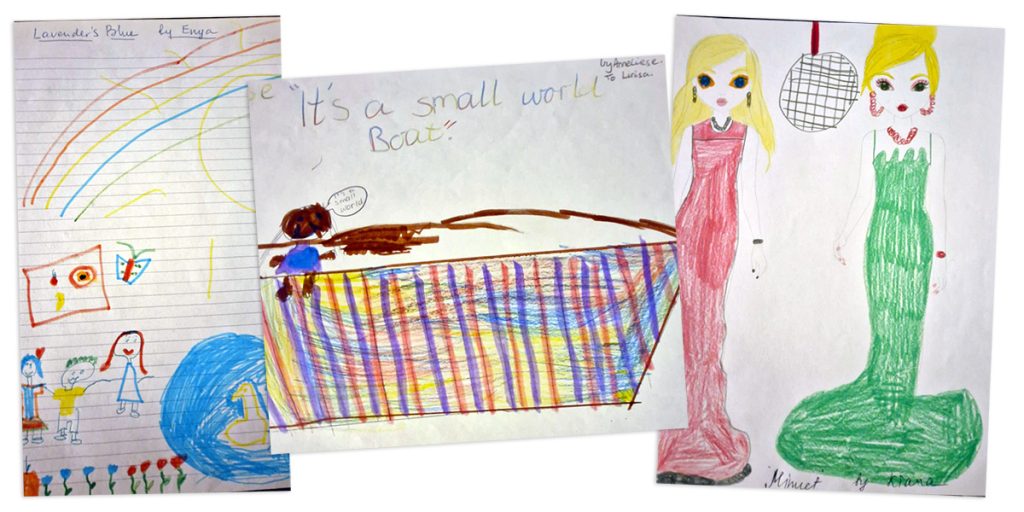
Imagination in Beginner Piano Lessons Comes Before Technique
Technical accuracy in beginner piano students develops over time, but imagination can be accessed immediately. When students are invited to respond creatively to music – without needing to analyse or explain – they engage more deeply and naturally.
Drawing allows students to:
- Respond emotionally rather than intellectually
- Focus on listening instead of correctness
- Express ideas they cannot yet verbalise or play
This approach is especially valuable in early piano lessons, where students often lack the technical skills to demonstrate musical understanding at the keyboard.
Using Drawing to Foster Imagination in Beginner Piano Lessons
In this method, the teacher plays a short musical piece, either during the lesson or as a listening task. The student then draws what they hear. There are no rules, no expected outcomes, and no “right” answers.
The drawing is not about artistic skill – it is a record of active listening.
Some drawings are abstract, others narrative. Some are full of colour and movement, while others are minimal and restrained. All are valid.
What matters most is that the student has actively listened and translated sound into another form of expression.
What Early Drawings Reveal About Musical Perception
Early drawings may seem simple, but they reveal important aspects of how a student perceives music, including:
- Sensitivity to mood and contrast
- Awareness of energy and intensity
- Personal emotional responses to sound
These qualities are essential for developing musicality later on. By prioritising imagination early, piano teachers help students develop expressive instincts long before formal terminology is introduced.
Why Imagination Matters Long-Term in Beginner Piano Lessons
Students encouraged to imagine from the beginning approach music with more confidence and curiosity. They are less afraid of interpretation and more willing to explore sound freely.
Technique can be taught step by step, but if imagination is ignored early on, it’s much harder to regain later.
That is why, in my teaching, imagination always comes first.
The artworks in this series are small snapshots of that early process. They are not art exercises, but reflections of listening, forming the foundation for expressive, thoughtful music-making.
Next in This Series
If you’re curious about how to introduce drawing to music as a practical listening task in beginner piano lessons, the next article will guide you through the steps and explain why this method works so well as homework.
Experience It Yourself
Book a free trial lesson to discover how nurturing imagination from the very first beginner piano lessons helps develop a deep, personal connection to music.